Cart
0
You may also like






A sagging gate almost always has one of three causes: loose hinge screws, a frame that has pulled out of square, or hinges that are too small for the gate's weight. To fix it, tighten or replace the hinges, square up the frame, and add a diagonal brace or strap hardware to hold everything in place. Most gates can be repaired in an afternoon with basic tools.
Gravity pulls on the latch end of every gate. Over time that load works hinge screws loose and pulls the frame into a parallelogram, so the latch corner drops and the gate drags or stops closing. The usual causes are:
· Loose or stripped hinge screws. The screws in the post lose their grip in the wood, especially after seasons of swelling and shrinking.
· A racked frame. Joints open up and the gate loses its square shape.
· Undersized hinges. Small or thin hinges flex under a heavy gate, and the load concentrates on a few screws.
· A leaning post. If the hinge post tilts, no hinge will hold the gate level.
Check these four things before buying anything:
1. Lift the latch end of the gate gently. If the hinge screws move in the post, the screws are loose.
2. Hold a level against the hinge post. If it is not plumb, the post is the problem, not the gate.
3. Measure the diagonals of the gate frame, corner to corner. If the two measurements differ, the frame is racked.
4. Look at the hinges. Bent, rusted or very short hinges are a sign they are too small for the job.
1. Take the load off. Support the latch end of the gate on a block or have a helper hold it level.
2. Tighten or replace the hinge screws. If the holes are stripped, use longer screws that reach solid wood in the post, or fill the holes with glued wooden dowels and redrill.
3. Fix the post if needed. Re-set a leaning post or brace it so it stays plumb.
4. Square the frame. Clamp the gate until both diagonals match.
5. Add a diagonal brace. Run it from the bottom corner on the hinge side up to the top corner on the latch side. This puts the brace in compression and keeps the latch end from dropping.
6. Reinforce the joints. Fix corner straps or T-straps across the frame joints so they cannot open again.
7. Rehang and adjust the latch. Check that the gate swings freely, then align the latch so it closes without lifting or pushing.
The right hardware does more than hide the damage. It carries the load so the wood does not have to.
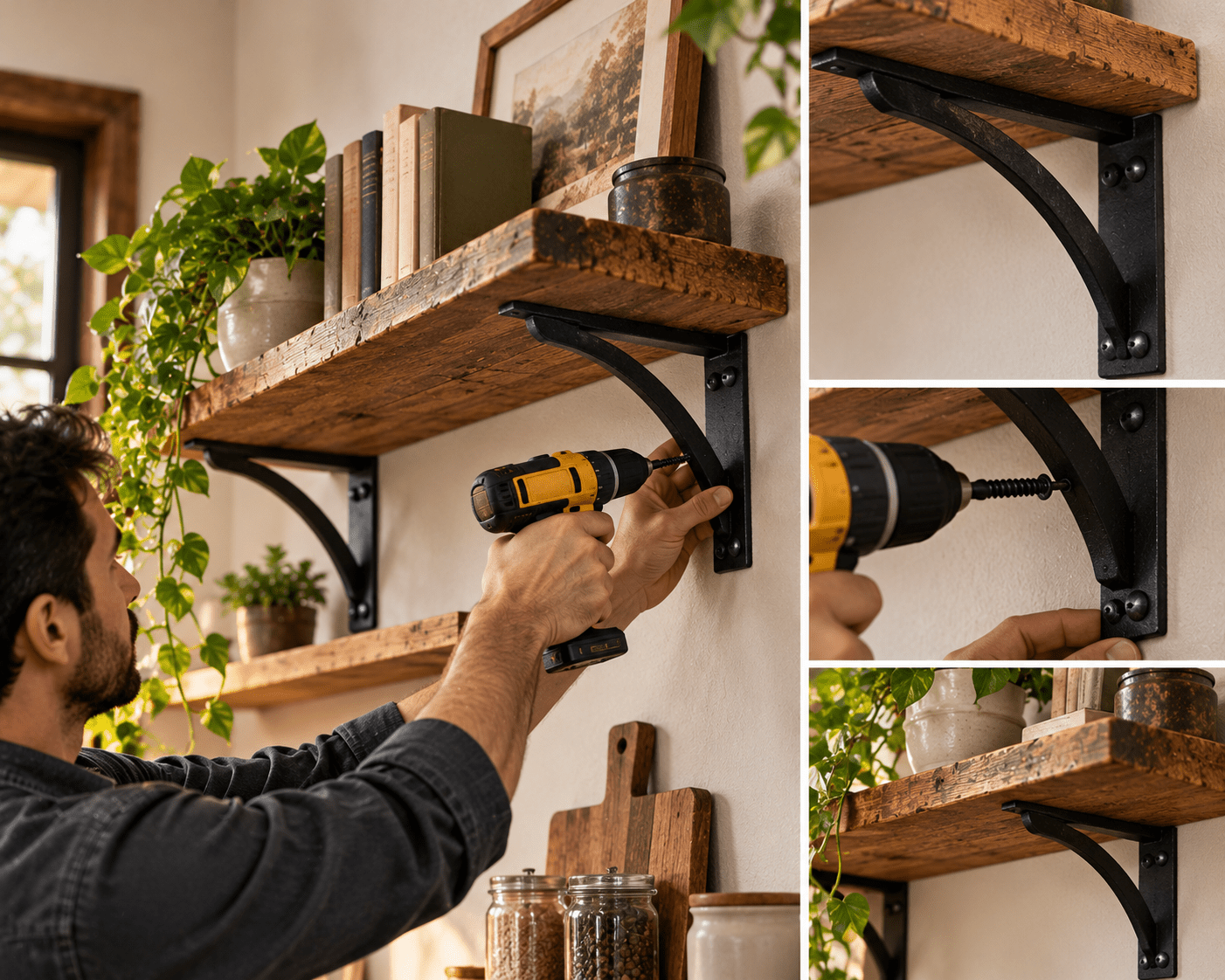
· Long strap hinges. A strap spreads the weight over a wide area of the gate boards instead of a few screws. A common rule of thumb is a strap about one-third the width of the gate. Browse our gate hardware for hand-forged options.
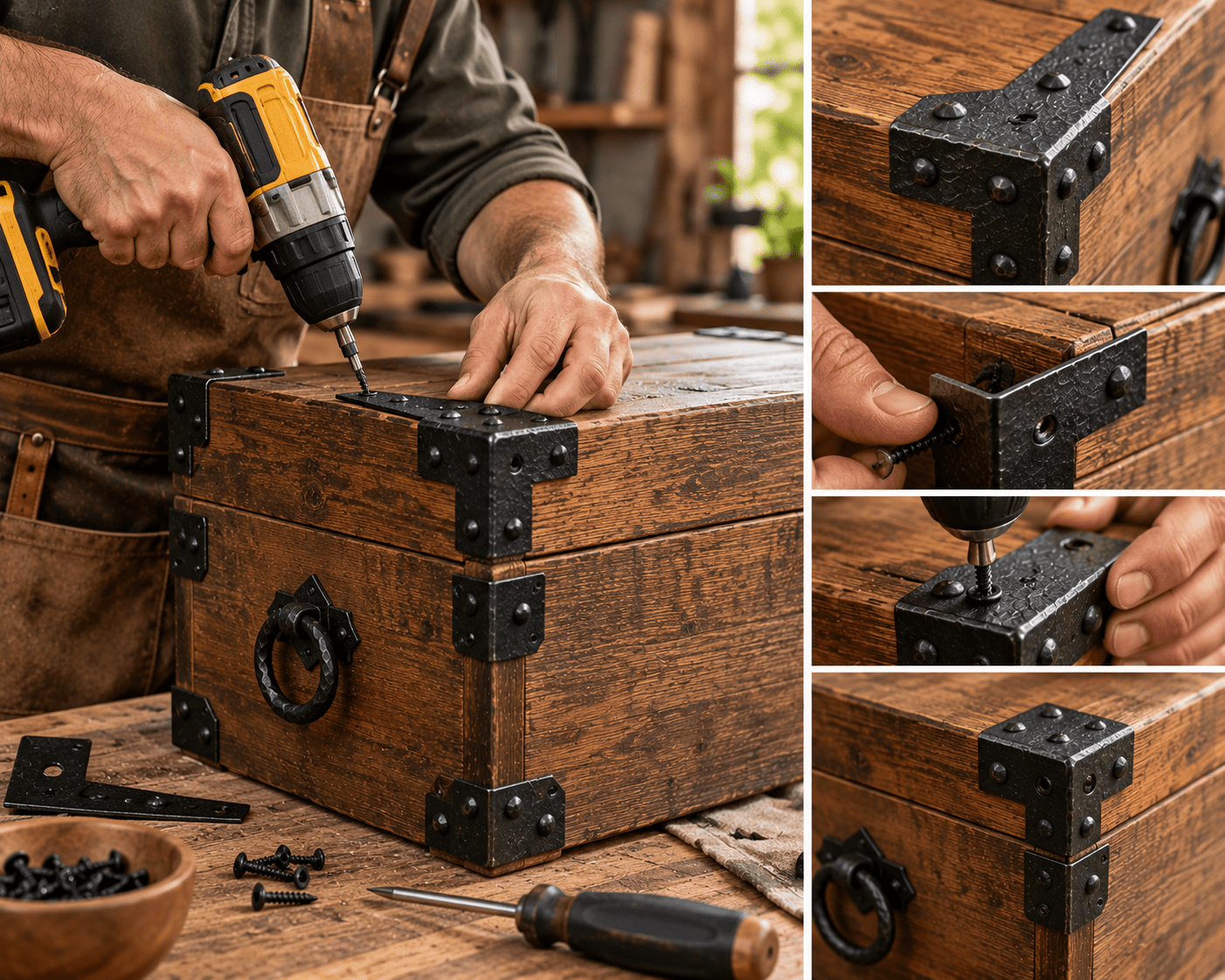
· T-straps. These reinforce the points where horizontal rails meet the vertical boards. See our T-straps.
· L-straps and corner straps. These lock the corners of the frame so it stays square. See our L-straps and corner straps.
One warning: decorative faux hinge straps look like strap hinges but do not support a gate. If you want the look without the load, read our guide to strap hinges vs faux (dummy) hinges before you buy.
Repair makes sense when the wood is sound. Consider rebuilding or replacing the gate if the boards are rotted, the frame has split at the joints, or the gate has warped so badly that it will not hold square even when clamped. Hardware can hold a good gate straight, but it cannot make weak wood strong.
· Use enough hinges. Wide or heavy gates need more support than a standard pair. Our guide on antique strap hinges covers sizing and installation.
· Fasten into solid wood. Long screws into the post do far more than short ones.
· Match the latch to the gate. A latch that pulls the gate sideways adds stress. See our gate latch buying guide.
· Protect the iron. Clean and re-oil exposed hardware once a year. Our guide on how to care for hand-forged iron hardware shows how.
· Plan the whole gate. Our guide to rustic gate hardware explains how hinges, latches and handles work together.
What is the most common cause of a sagging gate?
Loose hinge screws and a frame that has pulled out of square are the most common causes. Both let the latch end drop under the gate's own weight.
Can I fix a sagging gate without replacing it?
Yes, if the wood is sound. Tighten or replace the hinge screws, square the frame, and add a diagonal brace or reinforcing straps.
Which direction should a gate brace run?
The brace should run from the bottom corner on the hinge side up to the top corner on the latch side. In that position it holds the latch end up.
Do strap hinges stop a gate from sagging?
They help a great deal, because a long strap spreads the load across more of the gate. They work best on a frame that is already square and a post that is plumb.
Hardware Built to Hold a Gate Square
Every piece we make is hand-forged by real blacksmiths and made to carry weight, not just look good. Shop our gate hardware to find hinges and straps that keep your gate swinging true.