Cart
0
You may also like


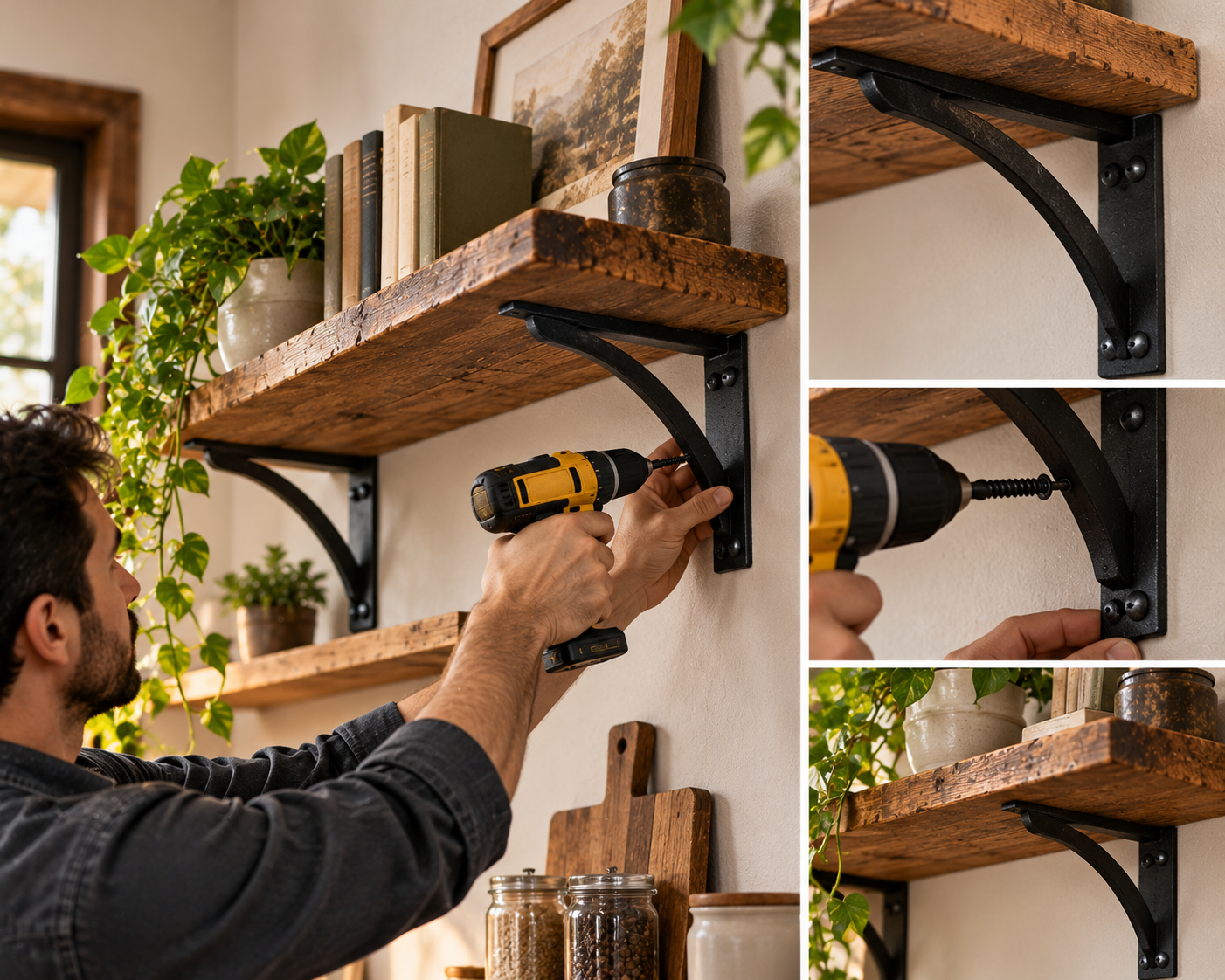
How much weight a shelf bracket can hold depends on the bracket, the screws and, most of all, what the bracket is fastened into. A well-made iron bracket screwed into wall studs can carry far more than the same bracket held by drywall anchors. For safe results, match the bracket size to the shelf depth, fasten into studs, and keep the load well below the limit of the weakest part of the system.
A shelf is only as strong as its weakest link. Four things set the limit:
· The wall. Brackets screwed into studs hold much more than brackets in plain drywall, even with anchors.
· The fasteners. Length, thickness and type of screw matter. Short or thin screws pull out first.
· The bracket itself. Thickness, design and material decide how much the bracket resists bending. Solid iron is much stiffer than thin stamped metal.
· The shelf and load placement. Heavy items near the front put far more leverage on the bracket than the same weight against the wall.
If a bracket comes with a manufacturer's weight rating, treat it as the maximum for ideal conditions, and stay well under it.
Size and depth go together. As a general rule, choose a bracket whose arm supports at least two-thirds of the shelf depth. A deeper shelf needs a longer bracket, because the farther the load sits from the wall, the more leverage it creates.
Our guide on how to choose the right size rustic shelf bracket covers sizing in detail. Once you know the size, browse our shelf brackets.
Spread the load across enough brackets. A common guideline is to space brackets no more than 16 to 24 inches apart for typical shelves, and to place one near each end. Heavy loads such as books, cookware or tools call for closer spacing.
|
Load |
Suggested spacing |
|
Light decor |
Up to 24 in. |
|
Everyday items |
16 to 24 in. |
|
Books, pots, tools |
16 in. or closer |
1. Find the studs. Use a stud finder and mark each stud. In most US homes, studs are about 16 inches apart from center to center.
2. Mark the shelf height. Decide where the shelf will go and draw a level line along the wall.
3. Position the brackets. Line each bracket up with a stud and keep the tops level with your line.
4. Mark the screw holes. Hold the bracket in place and mark every hole.
5. Pre-drill the holes. Use a bit slightly smaller than the screw. This prevents splitting and makes the screws go in straight.
6. Fasten the bracket. Drive screws long enough to go through the drywall and well into the stud. Tighten until snug but not crushed.
7. Check level. Place the shelf on top and use a level before you fasten the shelf to the brackets.
8. Secure the shelf. Fasten the shelf to the brackets from below with short screws that do not poke through the top.
You have three options:
· Move the shelf so the brackets land on studs. This is always the strongest choice.
· Mount a wooden board (a cleat or backer) across the studs, then attach the brackets to the board.
· Use heavy-duty wall anchors designed for the weight, and keep the load light. Anchors in drywall hold much less than studs, so reserve this for decorative shelves.
· Relying on drywall alone. This is the most common cause of shelves pulling out of the wall.
· Choosing a bracket that is too short. A short arm cannot support the front of a deep shelf.
· Skipping the level. A shelf that slopes even slightly slides items toward the low end.
· Overloading the front edge. Keep heavy items close to the wall.
· Forgetting to check the screws. Tighten them once a year, because wood swells and shrinks.
The finish does not change how much a bracket holds, but the design can. A thicker bracket and a diagonal brace give more support than a thin one. If you like the rustic look, hand-forged iron is a good match, since the thickness that makes it look sturdy also makes it work well. Keep exposed iron in good shape by following our guide on how to care for hand-forged iron hardware.
How much weight can a shelf bracket hold?
It depends on the bracket, the screws and the wall. A solid bracket fastened into studs can hold far more than one in drywall alone. Always stay below the stated rating and never rely on drywall anchors for heavy loads.
Do shelf brackets have to go into studs?
For anything heavy, yes. Studs give the strongest hold. For light decorative shelves, heavy-duty anchors can work.
How far apart should shelf brackets be?
Usually 16 to 24 inches. Space them closer for heavy items.
What size bracket do I need for a 10-inch deep shelf?
Choose a bracket that supports at least two-thirds of the depth, so roughly 7 inches or more. A longer bracket is better for heavy items.
Can I install shelf brackets without a stud finder?
You can tap the wall and look for outlet boxes as clues, but a stud finder is far more reliable and costs very little.
Our hand-forged shelf brackets are made to look as solid as they are. Browse our shelf brackets and find the right size for your shelf.