Cart
0
You may also like


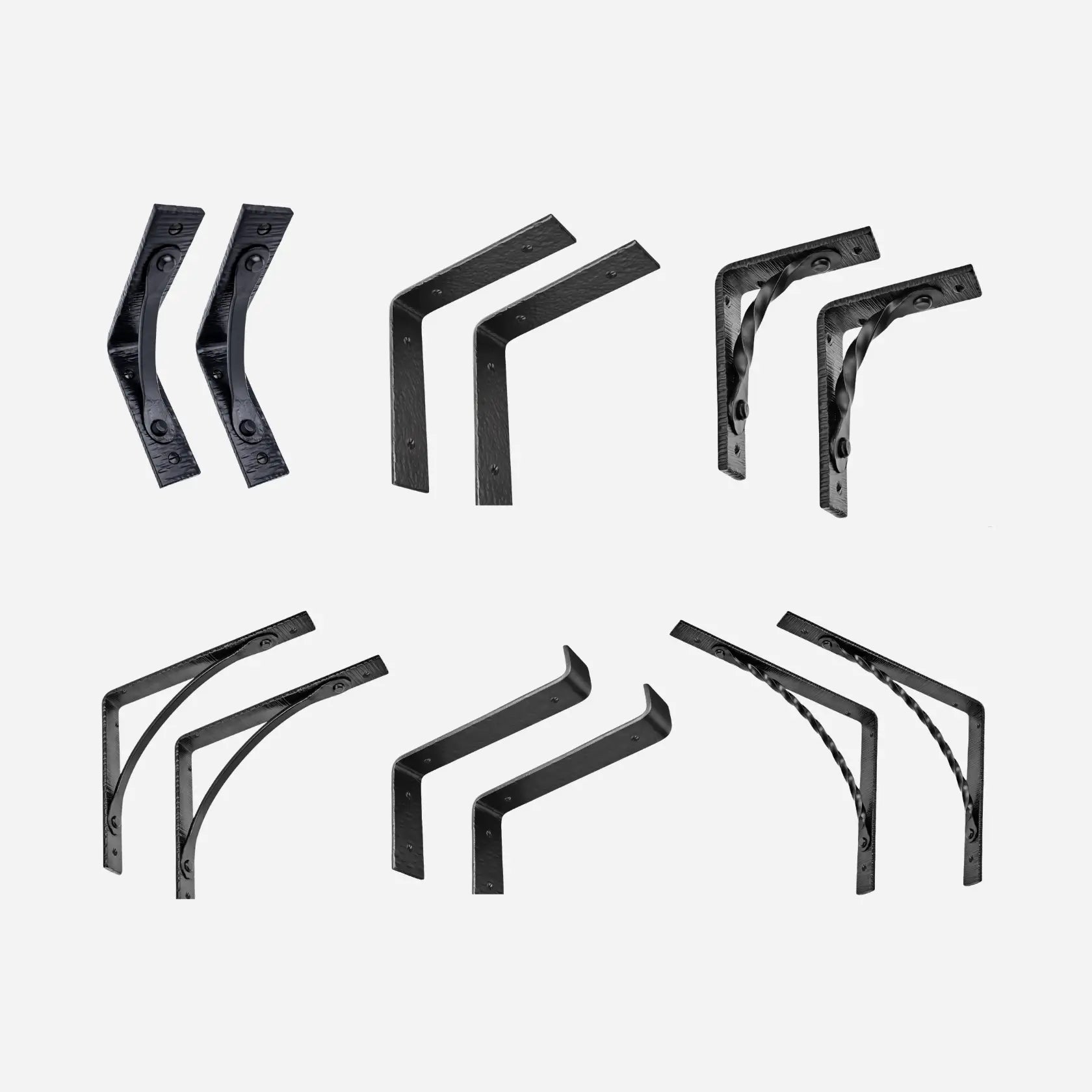
The right size for a rustic shelf bracket comes down to two things: how deep your shelf is, and how much weight it actually needs to hold. As a rule of thumb, your bracket should extend to at least three-quarters of the shelf's depth, a 10" deep shelf wants a bracket somewhere around 8", not a 5" one that leaves the front of the shelf unsupported. Get that part right, and most of the other decisions (style, finish, spacing) get a lot easier.
It's an easy thing to get wrong, though, especially when you're shopping by photos instead of measurements. A bracket that looks perfectly proportioned in a product photo can end up looking undersized or worse, unsafe, once it's actually holding a shelf full of books or dishes. Here's how to get it right the first time.
Start by measuring your shelf, not by picking a bracket that looks about right. A good bracket should support roughly 75-90% of the shelf's depth. Too short, and the front edge of the shelf has nothing underneath it, which means sagging over time and a lot more stress on the mounting screws than they were built for.
For reference, our Hacienda Series brackets come in 5", 10", and 12" depths, which covers most standard floating shelves. Deeper farmhouse-style shelves, like our Farmhouse Series 10x12, pair better with a wider bracket, since the extra shelf depth needs more support underneath it.
Weight capacity depends on the bracket itself, but also on how it's mounted and what's holding it there. As a general rule for calculating safe shelf load, divide a bracket's rated maximum by four to get a realistic safe load, that buffer accounts for the shelf material and mounting hardware, not just the bracket alone.
A few things that affect real-world capacity:
Wall type
brackets mounted into a stud hold significantly more than ones anchored into drywall alone.
Number of brackets
longer shelves need a third bracket in the middle, not just two at the ends.
Shelf material
solid wood holds up under sustained weight far better than particleboard, regardless of how strong the bracket is.
Hand-forged iron brackets, like ours, tend to outperform stamped or cast alternatives here too, the forging process aligns the metal's grain structure in a way that makes it more resistant to bending under load.
Once size is sorted, style is really just about matching the rest of the room:
Farmhouse Series
straighter lines, a simpler silhouette. Works well in kitchens and utility spaces where the bracket needs to blend in more than stand out.
Hacienda Series
more decorative scrollwork, a heavier old-world feel. Suits living rooms, entryways, and anywhere the bracket is meant to be part of the decor, not just support.
Barn House Series
rugged, straight-braced design. A natural fit for exposed-beam spaces, mudrooms, and anywhere with a more rustic, worked-in look.
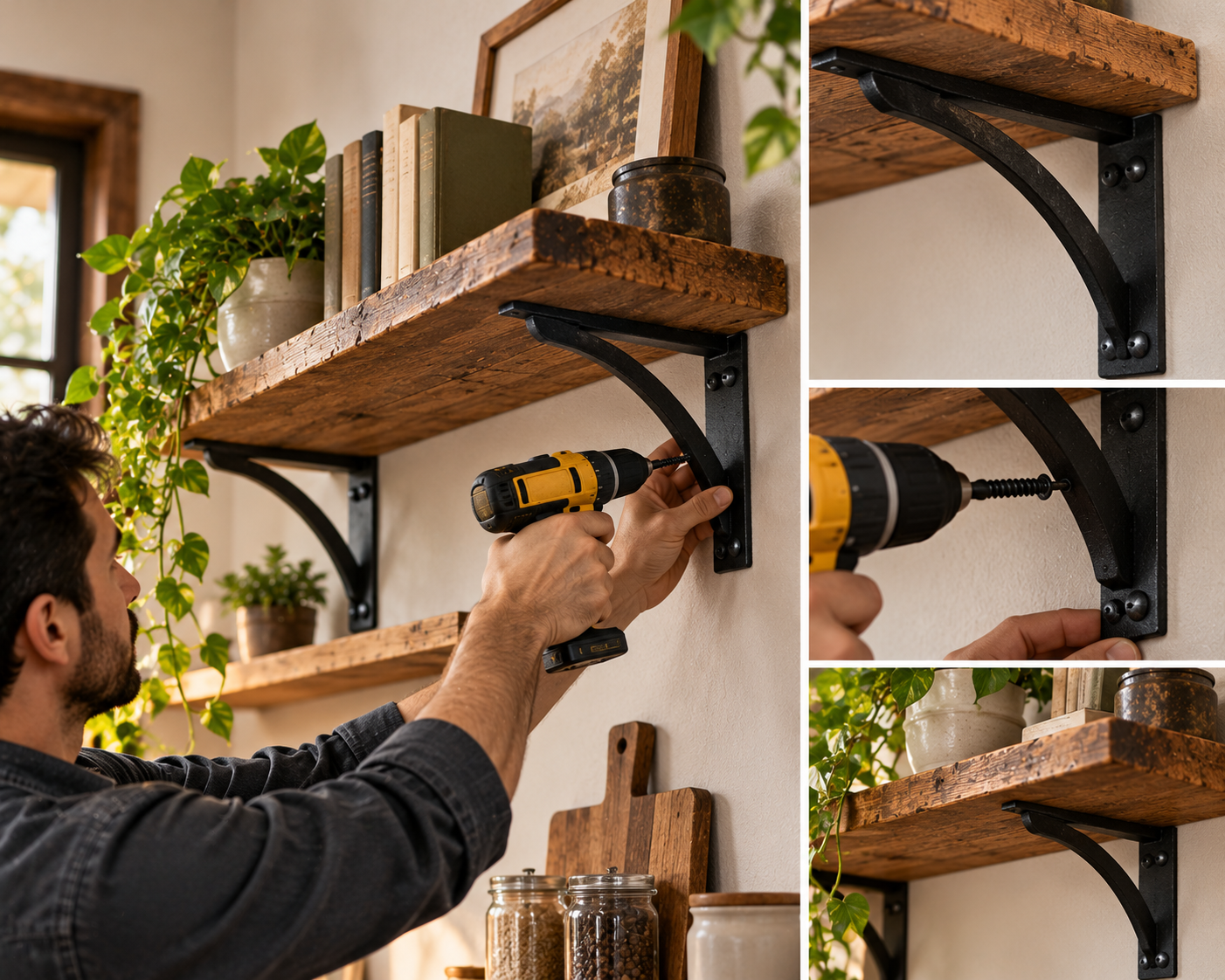
A well-chosen bracket can still fail if it's installed wrong. A few things worth getting right:
Find the studs first
at least one bracket per shelf should land on a stud, not just drywall anchors.
Level before you drill
even a slight tilt becomes obvious once weight is added.
Use the right screws
the screws that ship with a bracket aren't always rated for your specific wall type, especially with heavier iron hardware.
Space evenly
for shelves over 30", plan on a third bracket in the center rather than pushing two end brackets to their limit.
One mistake we see often: buying brackets before the shelf itself. It's easier, and usually cheaper, to cut a shelf to match a bracket's depth than to hunt for a bracket that happens to match a shelf you already own. If you're building from scratch, measure the space first, choose your bracket size, and build the shelf to fit — not the other way around.
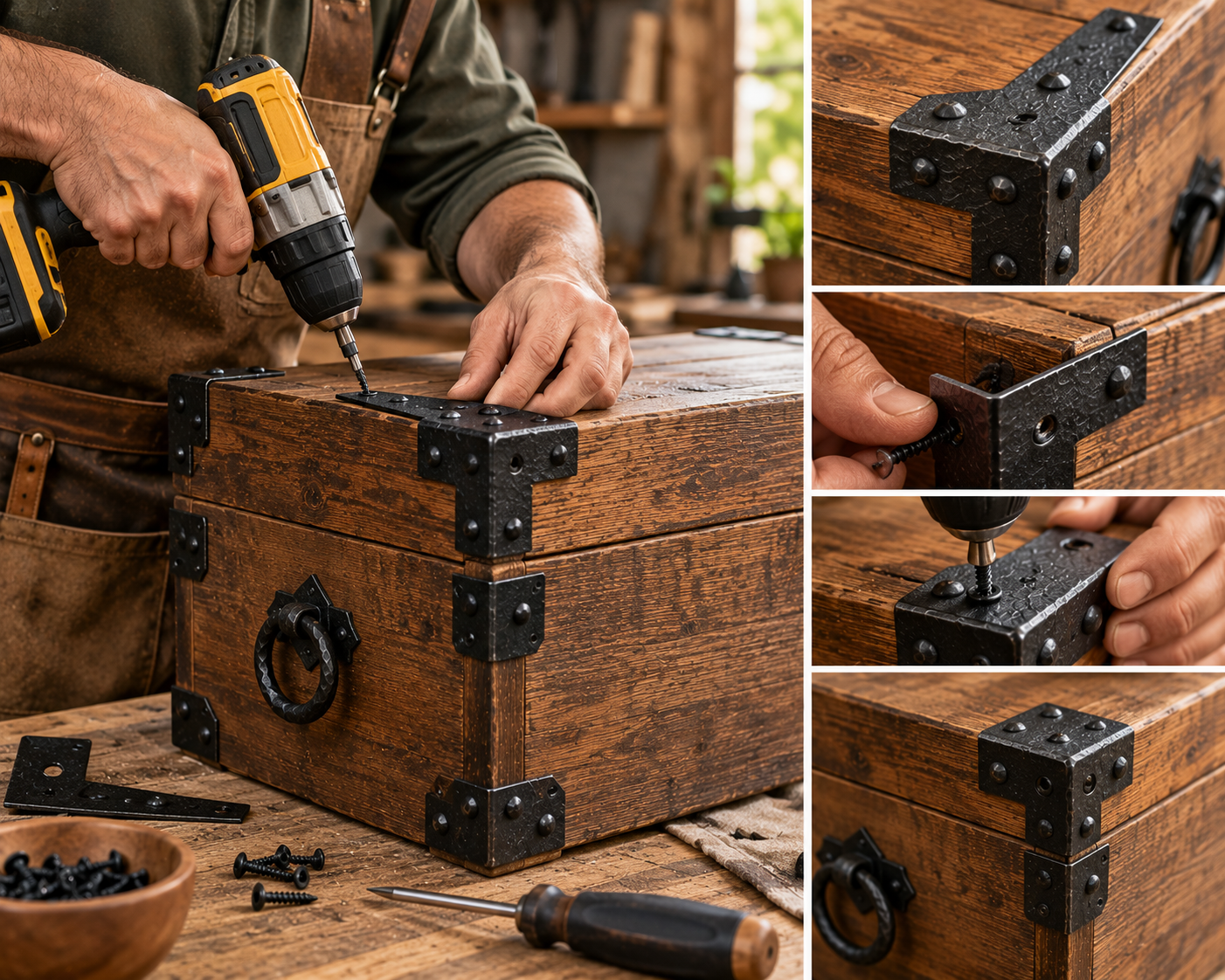
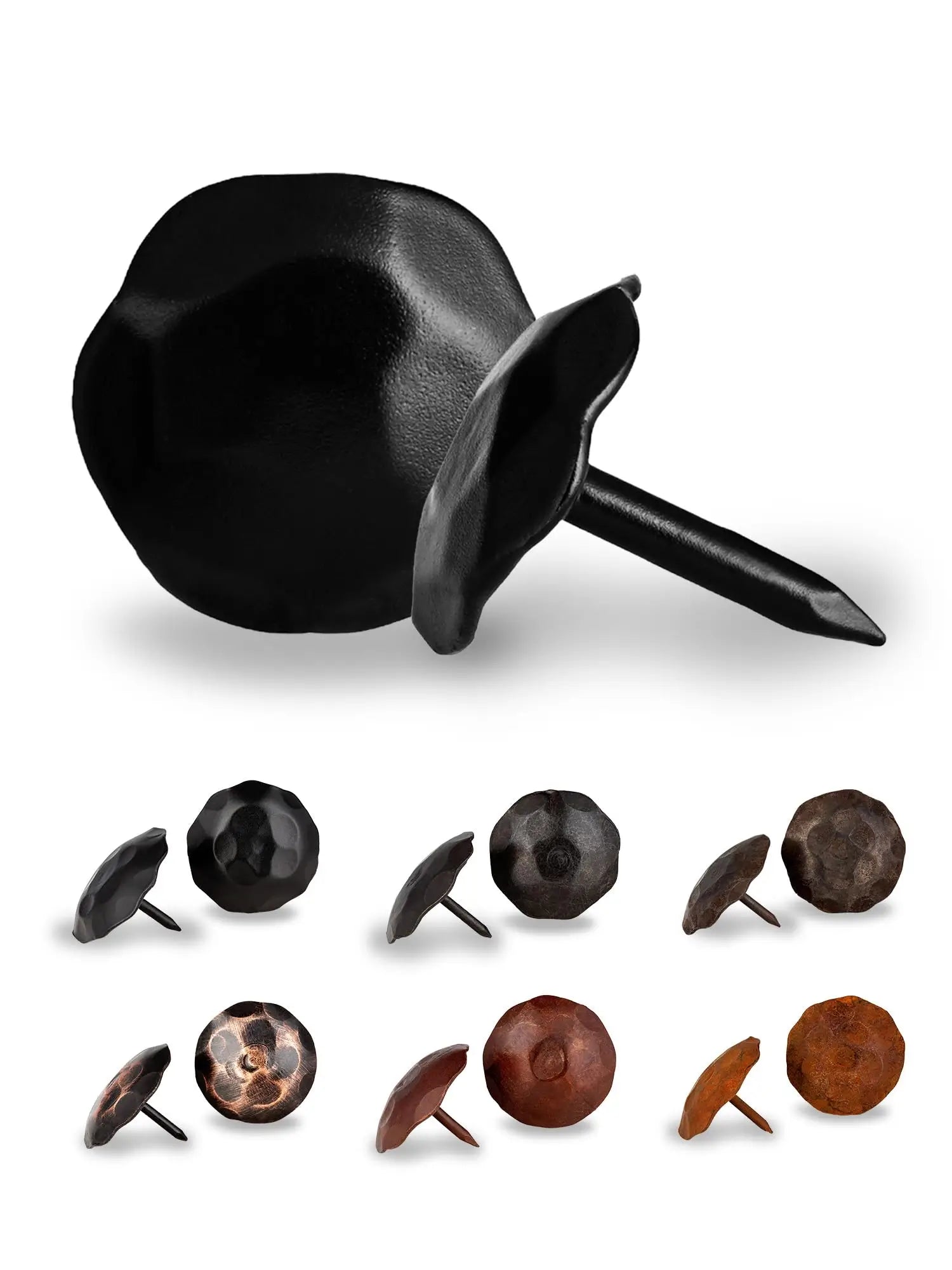
If the room already has other hand-forged pieces, strap hinges on a nearby door, corner straps on furniture, or clavos on a barn door, it's worth sticking to the same finish across all of it. Mixing a black iron bracket with oil-rubbed bronze hinges in the same room usually reads as inconsistent rather than intentional, even if each piece looks great on its own. Matching finish is the easiest way to make individually purchased hardware look like it was planned as a set.
What size shelf bracket do I need for a 10-inch shelf?
Look for a bracket around 8", covering roughly 75-90% of the shelf's depth. A bracket that's too short leaves the front edge of the shelf unsupported.
Can rustic iron brackets hold more weight than standard hardware store brackets?
Often yes. Hand-forged iron brackets are generally more resistant to bending and stress than lightweight stamped steel, though actual capacity always depends on the specific bracket and how it's mounted.
Do I need two brackets or three for a long shelf?
For shelves longer than about 30", a third bracket in the center is worth adding. It reduces sagging and takes pressure off the two end brackets.
Are decorative shelf brackets as strong as plain functional ones?
Yes, as long as the bracket is still solid iron rather than a hollow or lightweight decorative shell. The scrollwork and detailing are surface-level and don't affect load-bearing strength.
Every bracket we make is hand-forged solid iron, built to actually hold what you put on it, not just look the part. Browse our full shelf bracket collection to find the size and style that fits your space.