Cart
0
You may also like







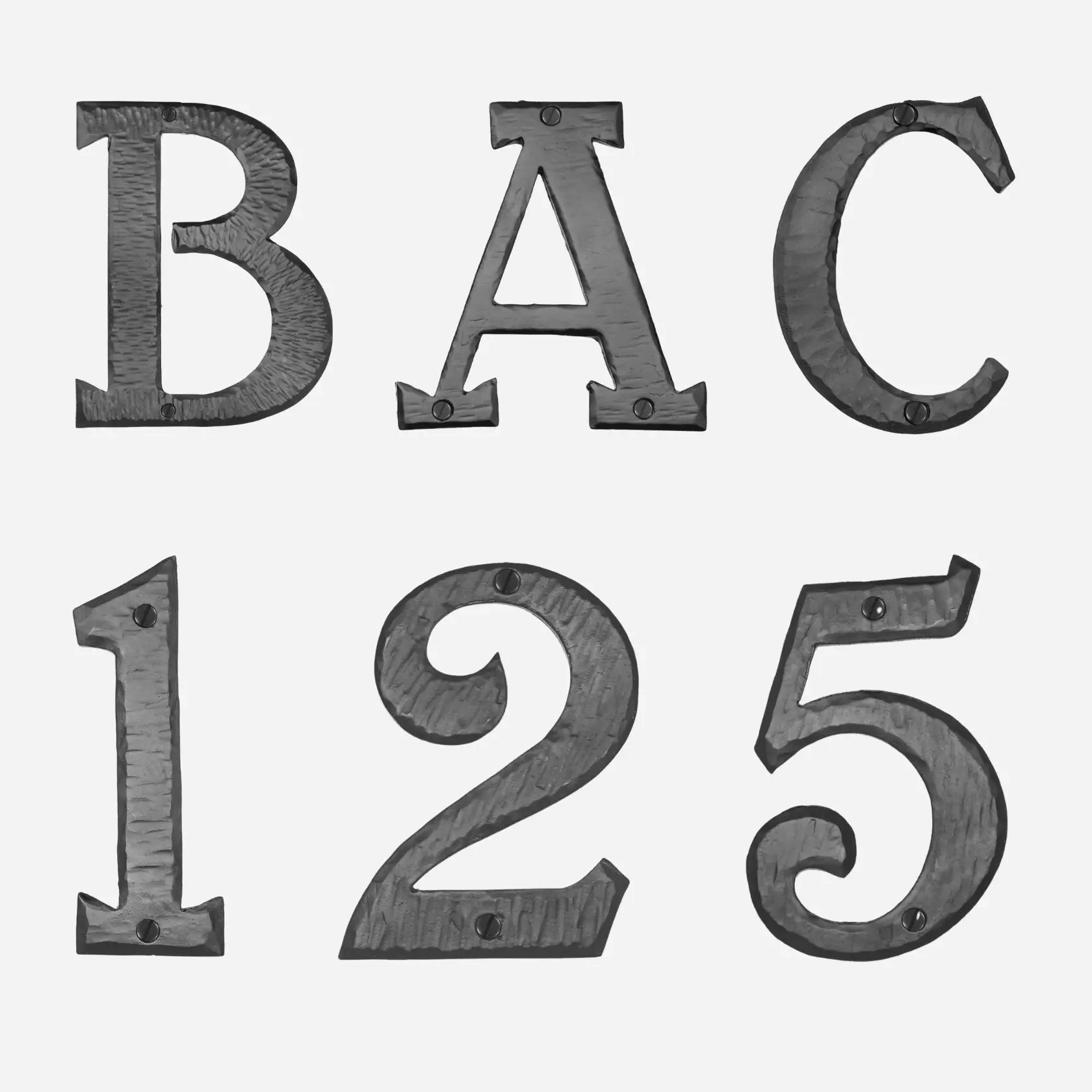
how big your numbers need to be to actually be readable from the street, whether you need numbers alone or letters too, and where you're going to mount them for the clearest view. Most local fire codes require address numbers at least 3 to 6 inches tall, visible from the road, so size isn't just a style choice, it's often a legal minimum. It's easy to treat house numbers as an afterthought, something picked up quickly at the end of a landscaping or exterior project. But they're one of the few pieces of hardware with a genuine safety function: emergency responders, delivery drivers, and guests all depend on them being visible and correctly placed.
Most residential codes require numbers between 3" and 6" tall, though exact requirements vary by jurisdiction, it's worth checking your local fire code before finalizing a size. A useful rule of thumb: roughly 1 inch of number height is needed for every 10 feet of viewing distance. A home set close to the road can work with 4" numbers, while a longer driveway or greater setback calls for larger numbers, or a second set mounted closer to the street. Alpha Building Inspections' guide covers the general code principles most municipalities follow if you want to dig deeper into your specific requirements.
the standard, required piece. This is the non-negotiable part of any address display.
optional, used for a family name, ranch name, or property name alongside or below the numbers. Common on larger properties, ranches, and homes with a named entry rather than just a street address.
If you're adding both, keep numbers as the visually dominant element, they're the functional, code-required piece, while letters serve more as a personalized accent underneath or beside them.
Hand-forged iron numbers and letters work best when they match the rest of a home's exterior hardware, gate latches, door hinges, light fixtures, so the address display reads as part of a coordinated exterior rather than a separate, mismatched add-on. Black finishes offer the strongest contrast against most siding and stone colors, which helps with both curb appeal and code-required legibility. Oil-rubbed bronze and natural iron work well too, but check contrast against your specific wall color before committing, a finish that blends too closely with the background undermines visibility regardless of size.
works well when the home itself is clearly visible from the street.
the better option for homes set back from the road, long driveways, or properties where the house itself isn't visible from the street.
for longer driveways, numbers at the curb and near the entry gives visibility from every approach, and is often recommended for emergency response regardless of code minimums.
Most hand-forged numbers mount with screws directly into siding, brick, stone, or a wood post, and installation is straightforward once placement is confirmed:
1. Dry-fit the full sequence first: lay numbers out with painter's tape before drilling anything, and step back to view them from the street.
2. Keep spacing even: inconsistent gaps between digits are one of the most common installation mistakes, and they're noticeable even from a distance.
3. Mount at eye level or slightly above: typically between 4 and 6 feet from the ground for numbers near an entry, so they're visible without being obscured by landscaping.
4. Pre-drill on masonry or stone: harder mounting surfaces need the correct drill bit and anchor type, which varies by material.
an elegant script-style number can look great up close but be nearly unreadable from a moving car. Prioritize a clean, high-contrast style for the actual numbers.
even well-placed numbers lose their value if shrubs or vines eventually block the view. Worth checking seasonally, not just at install.
if the home isn't visible from the road, numbers only at the front door don't help anyone trying to find the property from the street.
What size house numbers do I need?
Most codes require a minimum of 3"-6" tall numbers, visible from the street. Larger numbers or a second mounted set near the curb are recommended for homes set further back from the road.
Do I need both numbers and letters on my mailbox?
No, numbers are the required piece. Letters, for a family or property name, are optional and purely a style choice.
What finish is most visible from the street?
Black finishes generally provide the strongest contrast against most exterior colors, which helps with both daytime and nighttime visibility.
Should my numbers be on the house or the mailbox?
If the home is clearly visible from the street, near the entry works well. If the home is set back or partially obscured, mounting numbers on the mailbox or a post near the curb ensures better visibility.
Address Hardware That Matches Your Home
Every number and letter we make is hand-forged solid iron, sized and finished to match the rest of your exterior hardware. Browse our house numbers and mailbox letters and numbers to get started.


