Cart
0
You may also like
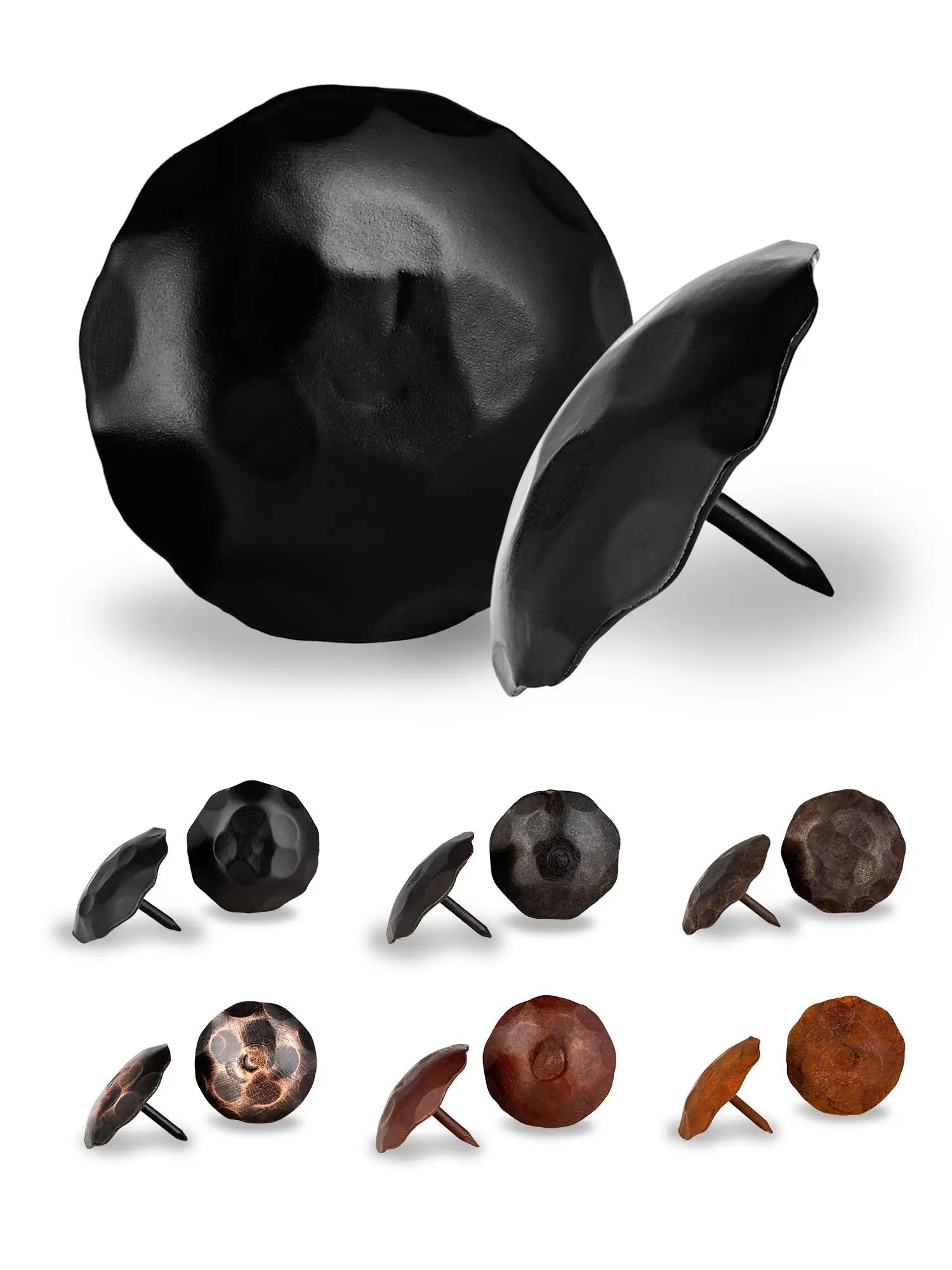


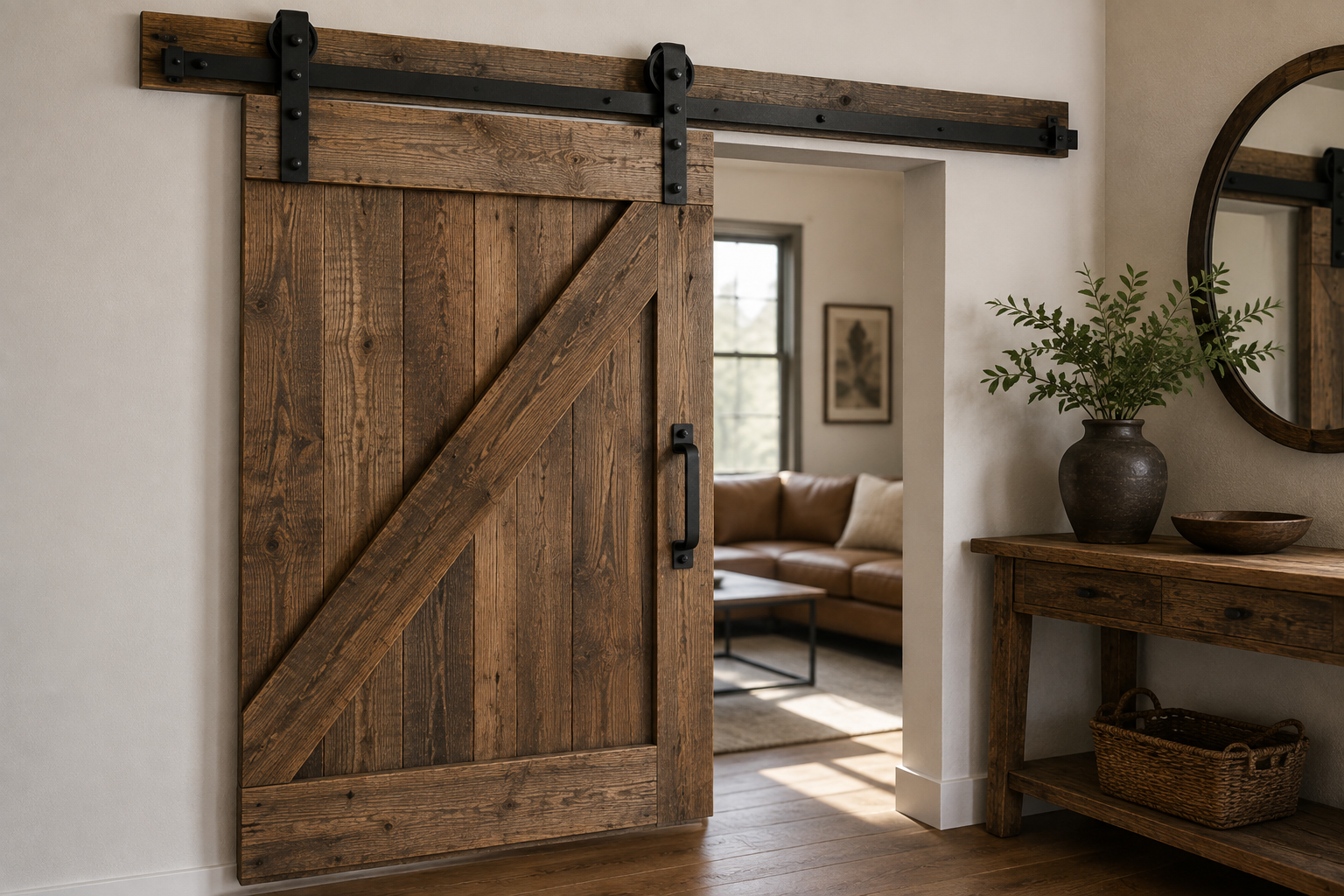
Barn door hardware, in the decorative sense, means four pieces: strap hinges or faux hinge straps, a handle or pull, clavos for texture, and sometimes a matching latch. This is different from the sliding mechanism, the track, rollers, and floor guide, that actually lets the door glide open and closed. Decorative hardware is what gives a barn door its authentic, hand-forged character; the track system is what makes it function. It's a common point of confusion when shopping, since both categories get called "barn door hardware." Knowing which one you're actually shopping for up front saves a lot of back-and-forth.
If your door already slides, or you've already bought a track and roller kit, you're shopping for decorative hardware, the visual layer that gives the door its rustic look. If your door doesn't move yet, you'll need a separate sliding track system first, track, rollers, floor guide, mounting brackets, sold by hardware retailers that specialize in the mechanical side of barn doors. Decorative hardware and track systems are sized and chosen independently of each other, so there's no compatibility issue mixing brands between the two categories.
mounted across the door to mimic a swing-out hinge. Since sliding barn doors don't actually pivot on hinges, faux hinge straps are the standard choice here, purely decorative, mounted flat.
mounted at a comfortable height for actually sliding the door, since barn doors are opened by hand.
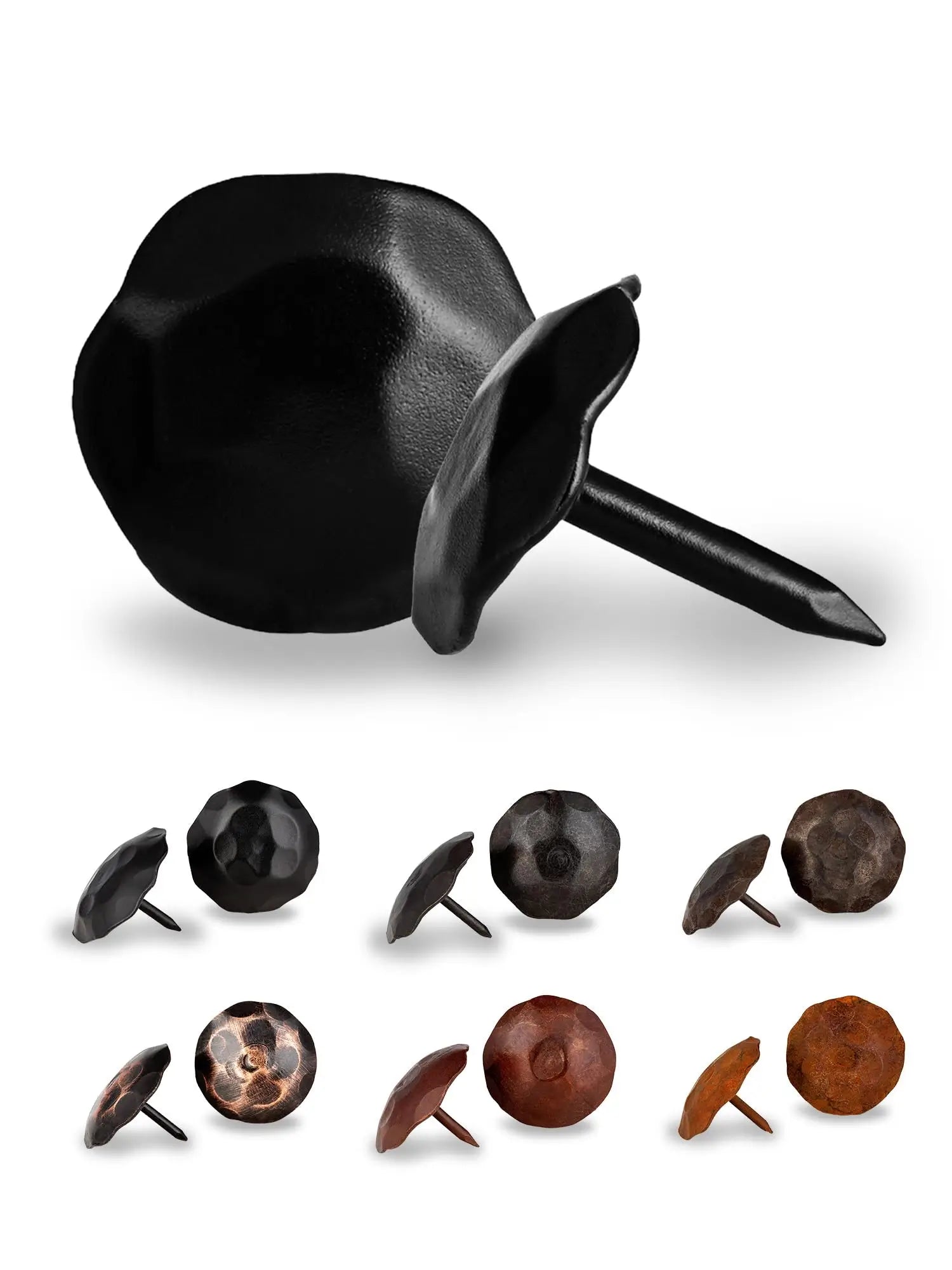
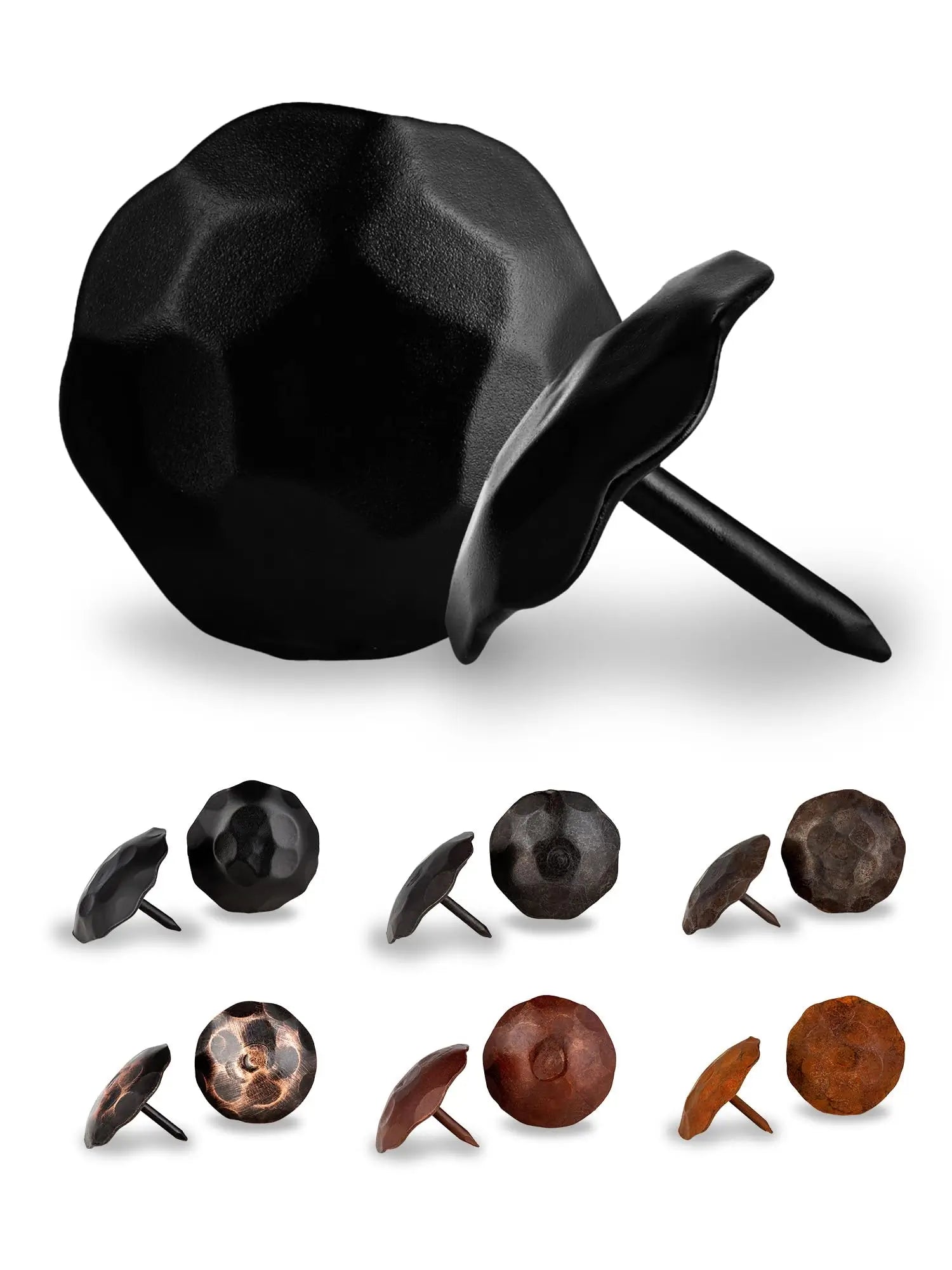
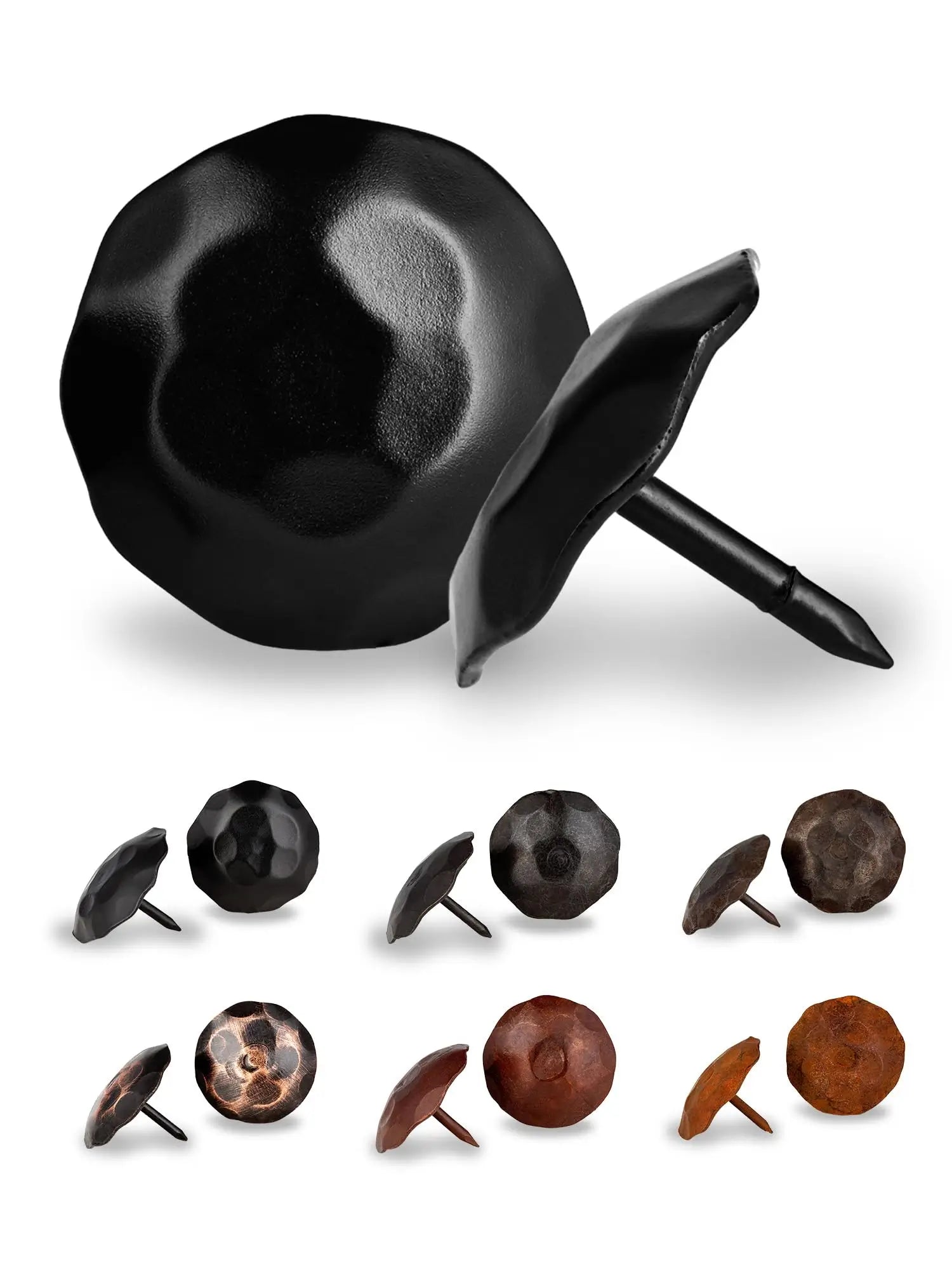
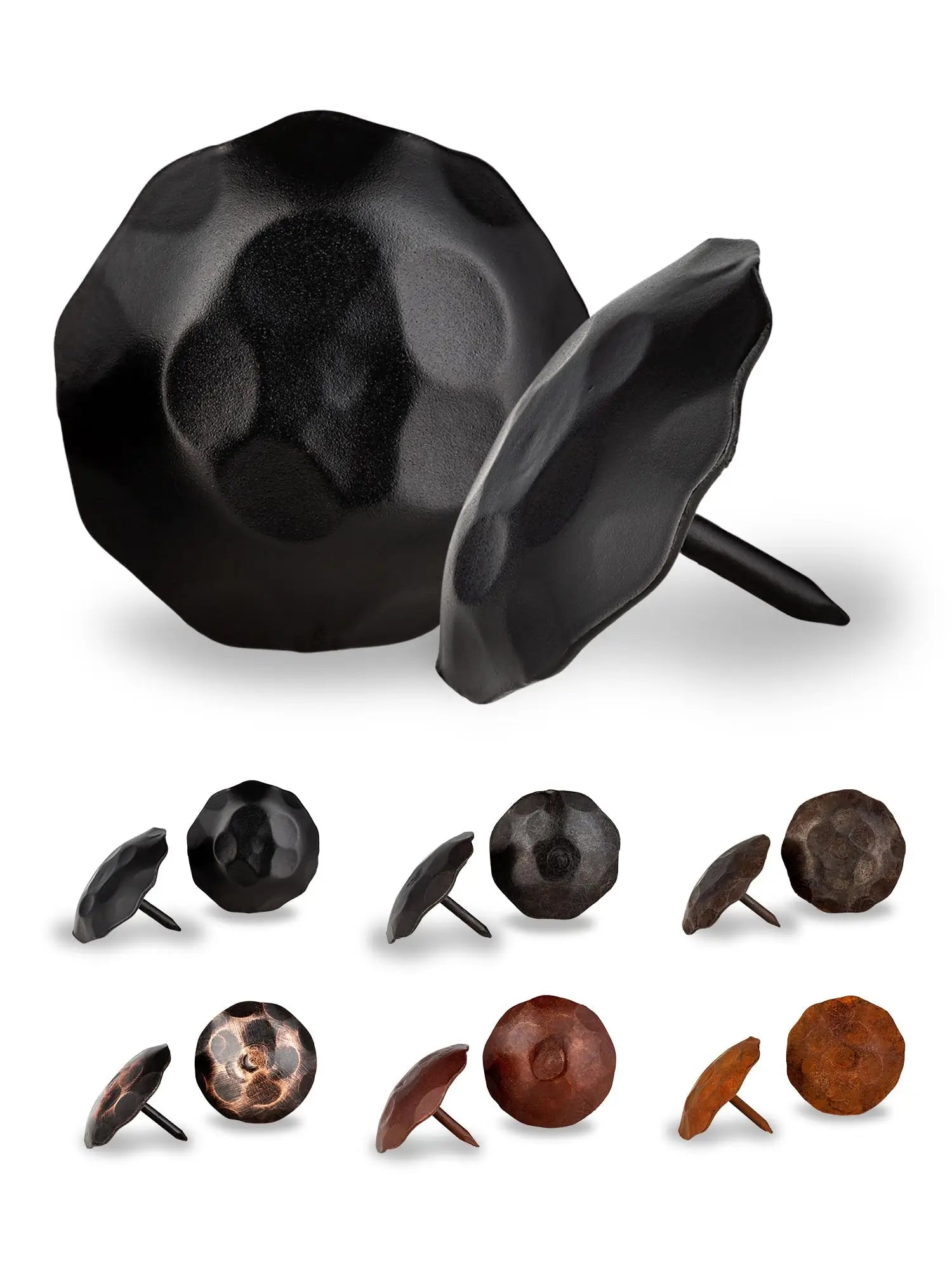
used along panel edges or hinge straps to add texture and reinforce the hand-forged look.
optional, but common on barn doors used for privacy, like bedrooms or bathrooms.
rugged, straight-braced hinge straps. The most literal "working barn" look, suited to rural and ranch-style homes.
cleaner lines, a simpler silhouette. Works well in interior spaces, like bedrooms or pantries, where the hardware shouldn't overpower the room.
heavier scrollwork, suited to Spanish Colonial or Southwestern-style homes with other ornate hardware nearby.
Hinge straps are typically sized as a proportion of the door's width, longer straps for wider doors, rather than a fixed standard size. A door in the 30"-36" range usually pairs well with straps in the 11"-14" range; wider doors can move up from there. As a general guide, two straps per door, one near the top and one near the bottom, is the standard layout, with a third added on taller or heavier doors for visual balance.
Interior barn doors have more finish flexibility, since they're not exposed to weather, oil-rubbed bronze and rusted finishes can be used freely for a warmer, aged look. Exterior barn doors, or interior doors near an entryway with temperature and humidity swings, do better with a black finish and rust-resistant coating, which holds up more consistently over time than lighter or unsealed finishes.
Decorative hardware typically installs after the door is already hung and sliding on its track, since it's easier to plan hinge strap and handle placement with the door in its final position. A few things worth planning for:
make sure no hardware, especially handles, extends far enough to catch on the wall, trim, or frame when the door is fully open.
typically 36"-40" from the floor, though this can shift depending on who uses the door most.
heavier hand-forged hardware holds better with pilot holes than screwed directly into unprepared wood.
a real strap hinge has no job on a sliding door and will just sit there unused. Double-check a listing specifies faux or decorative before ordering.
hardware sized for a narrow interior door often looks lost on a wide barn door. Size up relative to door width, not a fixed standard.
if nearby hinges, handles, or light fixtures are already a specific finish, matching it makes the whole space read as intentional rather than assembled piecemeal.
Do I need the sliding track and the decorative hardware, or just one?
Both, if you're starting from scratch. The track system makes the door function; the decorative hardware gives it the barn-door look. If your door already slides, you only need the decorative layer.
Should I use real strap hinges or faux ones on a barn door?
Faux hinge straps are standard for barn doors, since the door doesn't actually pivot on hinges, it slides on a track. Functional strap hinges are for swing-out doors and gates instead.
How many hinge straps does a barn door need?
Two is standard, one near the top and one near the bottom of the door. Taller or heavier doors sometimes add a third for visual balance.
What finish holds up best on an exterior barn door?
A black finish with a rust-resistant coating is the most reliable choice for barn doors exposed to weather or significant humidity changes.
Give Your Barn Door Authentic Character
Every strap, handle, and clavo we make is hand-forged solid iron. Browse our Barn Door Hardware collection to start planning your door


