Cart
0
You may also like


A door knocker should be sized to roughly one-quarter the width of your door and mounted at a height comfortable for the average adult to reach, generally 40"–48" from the ground. Beyond sizing, the main decision is style, ring, bar, or figural, and finish, which should match the rest of your entry hardware rather than being chosen in isolation.
Door knockers are one of the few pieces of hardware still genuinely functional and decorative at once, and on a farmhouse or rustic entry, the right one pulls the whole door together.
Even in homes with a doorbell already installed, a knocker adds a tactile, old-world detail that a doorbell alone can't replicate, it's often the single piece of hardware visitors interact with directly before ever stepping inside.
Ring knockers
A circular ring, often mounted through a decorative back plate or animal-head fixture, historically a lion or similar motif. This is the most traditional and widely recognized knocker style.
Bar or drop knockers
A straight or gently curved bar that swings on a hinge point, striking a plate mounted below it. Simpler and more streamlined than a ring style, this fits well with farmhouse and understated rustic doors.
Figural knockers
Shaped like an animal, hand, or other decorative figure, these make more of a style statement and work best on doors where the knocker is meant to be a focal point rather than a background detail.
The back plate mounted behind the knocker also affects the overall look as much as the knocker itself, a simple round plate reads differently than an elongated or scrolled one, so it's worth considering both pieces together rather than focusing only on the knocker shape.
As a general guideline, the knocker should span roughly 25% of the door's width, a knocker that's too small reads as an afterthought, while an oversized one can overwhelm the door's proportions. Mounting height matters just as much: too high or too low, and the knocker becomes awkward to actually use.
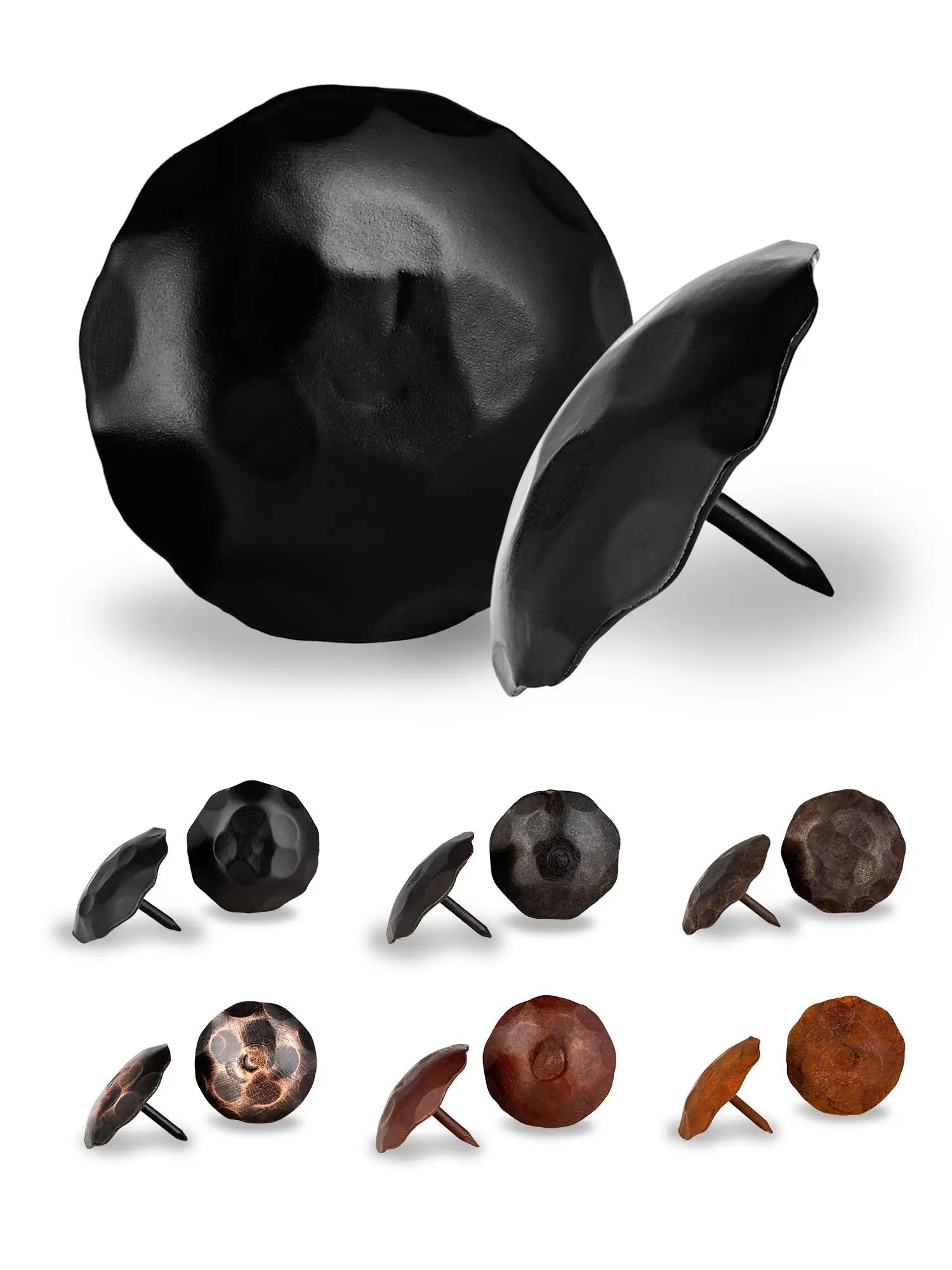
A door knocker shouldn't be chosen in isolation. If your entry already features strap hinges or clavos, matching the knocker's finish keeps the whole entry reading as one coordinated set rather than a single standout piece surrounded by mismatched hardware.
Most door knockers are genuinely functional, they make an audible knock when used. Some decorative-only versions exist purely for visual effect, often paired with a doorbell as the actual means of alerting someone inside. If audible function matters to you, confirm this before ordering, since it's not always obvious from a product photo alone.
A functional knocker also needs a striking plate positioned correctly beneath it, if the plate is misaligned or too far from the knocker's resting position, it won't produce a satisfying sound even if the hardware itself is well made. This is worth checking during installation, not just at the moment of purchase.
Since a knocker takes direct hand contact every time it's used, it shows wear faster than most other entry hardware. Periodic cleaning and an occasional check for loose mounting hardware keeps it functioning properly, our iron hardware care guide covers the basics in more detail.
Can a door knocker be installed on any door thickness?
Most knockers accommodate standard door thicknesses, but very thick or very thin doors may need a specific mounting hardware length, check the product specifications before ordering.
Should the door knocker match the handle or the hinges?
Ideally both. Matching finish across the knocker, handle, and any visible hinges is what makes an entry read as intentionally coordinated.
Every piece we make is hand-forged solid iron, built to match across your entire entry. Browse our full hardware collection to find a knocker that fits your door. (Note: confirm this product category exists as an active collection before publishing.)


